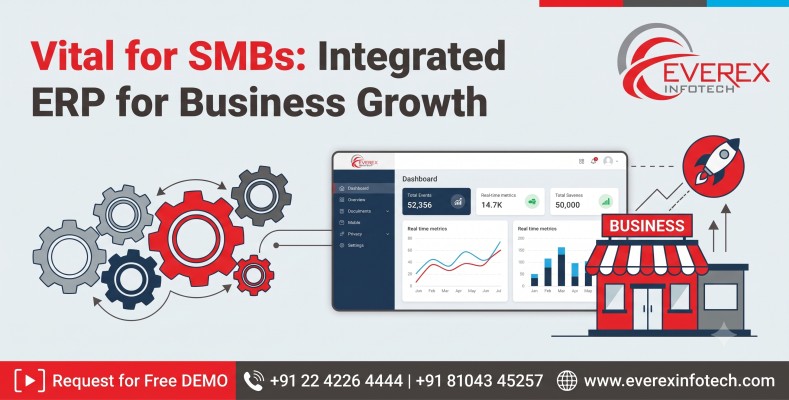
As businesses grow, operational complexity increases. What once worked using basic spreadsheets and isolated accounting software quickly becomes a maze of conflicting data, missed deadlines, and departmental miscommunication.
This is where Enterprise Resource Planning (ERP) software becomes essential. An ERP system serves as the central nervous system of an enterprise, integrating core operations into one cohesive platform.
How an ERP System Works
At its core, an ERP platform connects all essential business functions:
Procurement and Inventory: Monitors incoming raw materials, manages supplier orders, and tracks inventory levels in real time.
Production and Operations: Coordinates assembly schedules, equipment allocation, and job-work processing.
Sales and Order Management: Tracks the customer journey from quotation to fulfillment.
Finance and Accounting: Automatically records transactions from across the company into unified ledgers.
Instead of each department keeping its own records, an ERP provides a shared database where a change in one area updates the rest of the company instantly.
Key Benefits for Growing Enterprises
Single Source of Truth: Decision-makers no longer need to reconcile conflicting reports from sales and warehouse teams. Everyone works from the same live data.
Lower Operational Costs: Automating repetitive data entry reduces human error, cuts down administrative labor, and prevents expensive over-purchasing.
Faster Customer Fulfillment: With live inventory and production tracking, customer inquiries receive immediate, accurate responses regarding stock availability and delivery timelines.
Implementing a modern ERP software is no longer a luxury reserved for multinational corporations; it is a foundational tool for any SMB looking to scale efficiently.
Share Your Feedback
Thank you for visiting our website. We welcome your feedback, suggestions, and reviews. Your insights help us improve our products, services, and overall customer experience.